

 Hero profile
Prologue
The crimson arena roars as the ember crown hangs above the sand. Isolde lowers her fireblade and asks what victory should prove.
Isolde Flamecourt enters the tale as fireblade noble, shaped by fierce, glamorous, competitive and the atmosphere of Crimson arenas, noble balconies, ember courts, ceremonial dueling halls. The story below follows that hero path as a finished chronicle.

Chapter 1 / Opening challenge
Applause as Weather
The crowd shifts like flame. Isolde says the first enemy is the need to be adored. Isolde Flamecourt carries the moment with the same fierce, glamorous, honorable energy that defines the whole tale, letting the danger feel close without breaking the story into a game prompt.
The first turn of the story centers on this question: Choose what your character wants the arena to understand. Instead of asking the reader to answer, the chapter follows how the hero weighs that choice, who is protected by it, and what the setting reveals in response.
By the end of the chapter, Isolde nods once, which counts as applause. The result changes the path ahead, giving the chronicle a new clue, vow, ally, or cost before the next scene opens.
Chapter 2 / Political choice
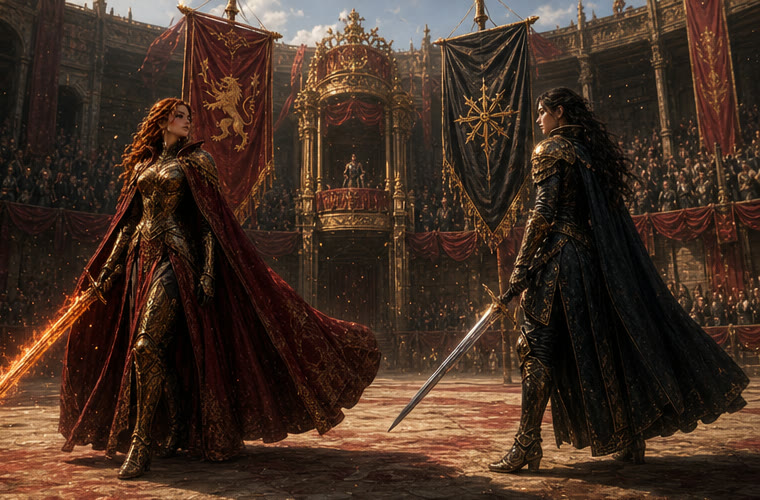
The Rival Standard
A rival house raises a standard that insults the visitor party and dares them to answer publicly. Isolde Flamecourt carries the moment with the same fierce, glamorous, honorable energy that defines the whole tale, letting the danger feel close without breaking the story into a game prompt.
The next turn of the story centers on this question: Answer with restraint, wit, or a formal challenge. Instead of asking the reader to answer, the chapter follows how the hero weighs that choice, who is protected by it, and what the setting reveals in response.
By the end of the chapter, The arena listens instead of shouting. The result changes the path ahead, giving the chronicle a new clue, vow, ally, or cost before the next scene opens.
Chapter 3 / Trial
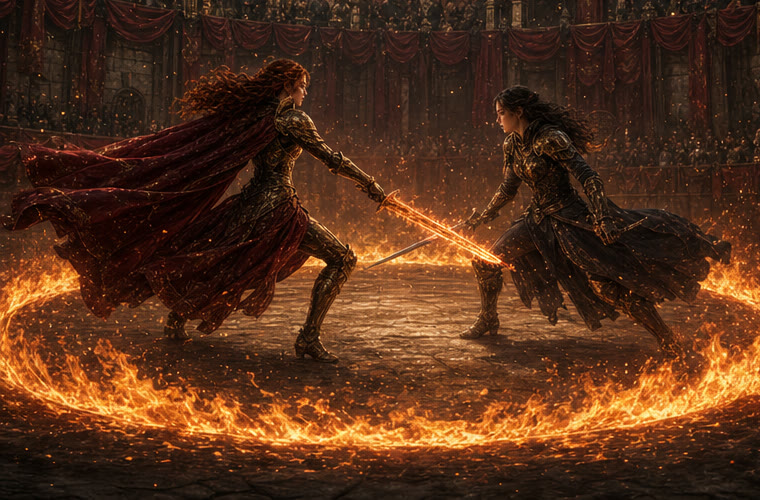
Circle of Embers
The duel circle lights with harmless ritual flame, measuring confidence rather than injury. Isolde Flamecourt carries the moment with the same fierce, glamorous, honorable energy that defines the whole tale, letting the danger feel close without breaking the story into a game prompt.
The next turn of the story centers on this question: Pick the move that shows discipline instead of aggression. Instead of asking the reader to answer, the chapter follows how the hero weighs that choice, who is protected by it, and what the setting reveals in response.
By the end of the chapter, The ember crown descends halfway. The result changes the path ahead, giving the chronicle a new clue, vow, ally, or cost before the next scene opens.

Chapter 4 / Finale
Victory With Witnesses
The crown can crown Isolde, the visitor, or the cause they both defended. Isolde Flamecourt carries the moment with the same fierce, glamorous, honorable energy that defines the whole tale, letting the danger feel close without breaking the story into a game prompt.
The final turn of the story centers on this question: Decide who should receive the crown and why the crowd will remember it. Instead of asking the reader to answer, the chapter follows how the hero weighs that choice, who is protected by it, and what the setting reveals in response.
By the end of the chapter, Isolde calls you rival with respect. The result changes the path ahead, giving the chronicle a new clue, vow, ally, or cost before the next scene opens.
Epilogue
Where the tale rests
Isolde calls you rival with respect. The finished story remains here as a readable hero chronicle, while the quest version keeps the same scenes available for live participation.
 Play this quest